
Project StarlightIN DEVELOPMENT
A camera sensor that can see in the dark.
The human eye is remarkably good at seeing in low light. Camera sensors are not. As sensors get smaller, the problem gets worse, and conventional hardware has never been able to close that gap. Project Starlight was designed to address this. By integrating Mythic's APU into the image sensor using hybrid bonded wafers, low-light correction runs as a neural network at the source, at under 500mW, before the data ever leaves the sensor.
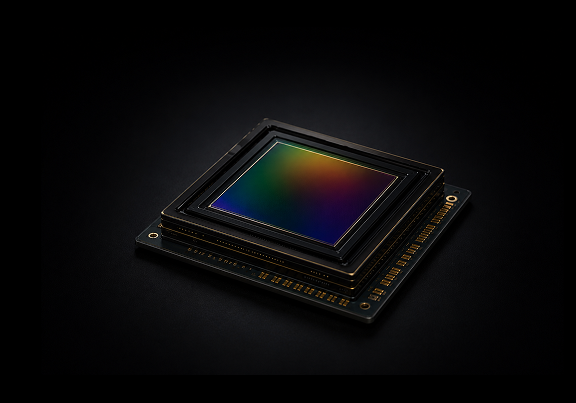
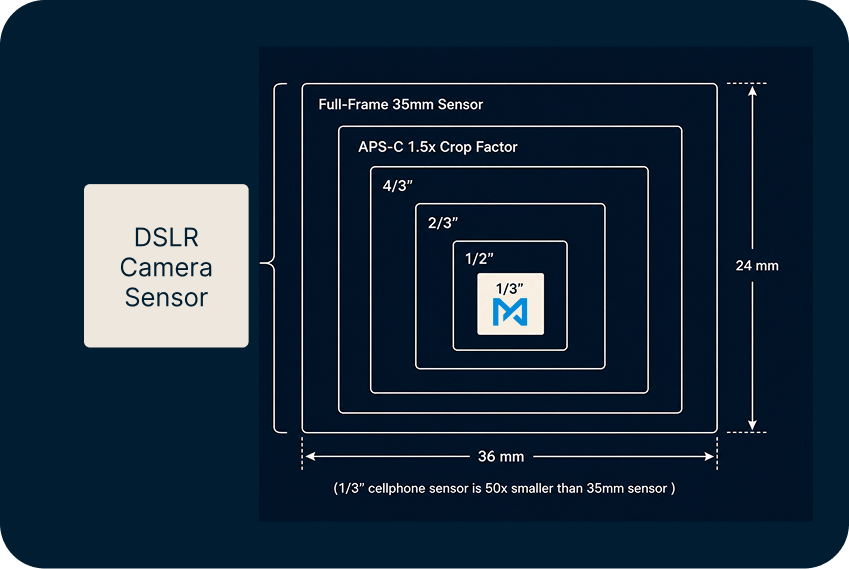
ComparisonBetter low-light performance all in a much smaller sensor.
how it worksLow-light correction at the speed of light.
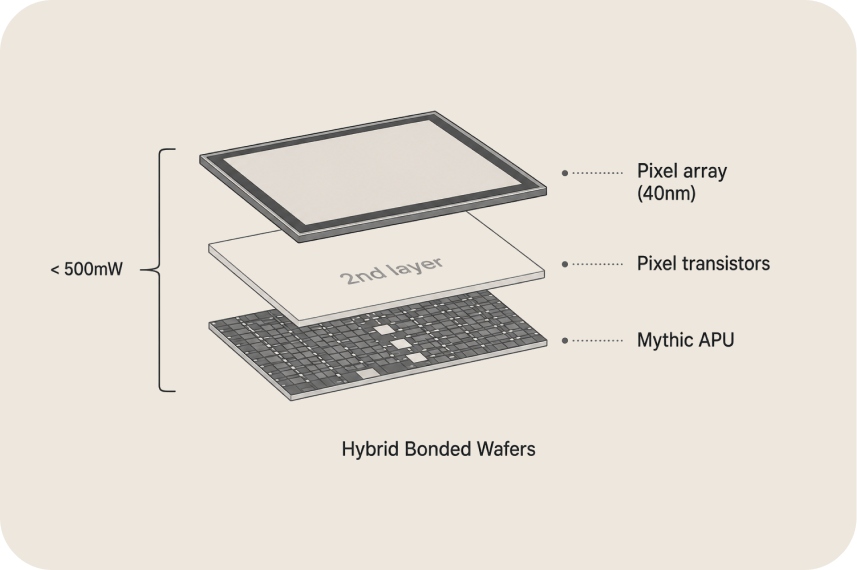
Project Starlight works by bringing the processing to the sensor rather than sending data elsewhere to be corrected. A photo diode array is stacked directly on top of the Mythic APU through hybrid bonding, combining the pixel array, pixel transistors, and Mythic APU into a single package running at under 500mW. Low-light correction using the Zero-DCE network runs entirely on-chip, with power under 200mW.
Who it’s forPrecision imaging for high-stakes environments.
Smart imaging is a $20 billion market, with mission-critical applications in defense, automotive, medical, and security growing at 50% per year. Mythic gets even better as sensor resolution increases, making Starlight more valuable as the market evolves.
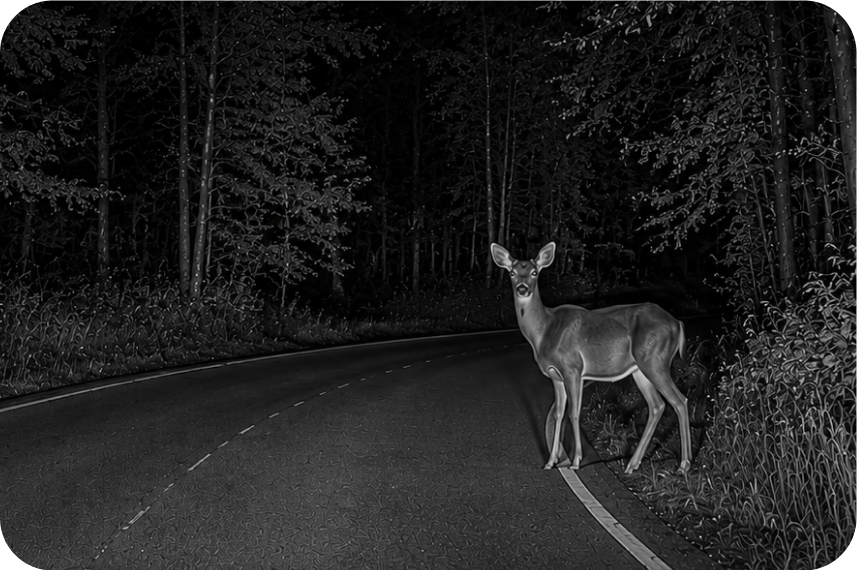
See it in actionState of the art imager vs. Mythic Imager.
The left side of the video shows the original content, and the right side shows the output of Mythic’s Imager Technology, running on Mythic M1 silicon.
The video on the left show the original content of a poorly lit city scene in which pedestrians are barely visible. The 720P video content on the right shows the output of Mythic’s Imager technology running on Mythic M1 silicon. In this scene, the pedestrians can now be seen. This video is generated using Mythic M1 silicon and uses 720P content.


Ready to build on the right architecture?
See how Mythic can help with your specific needs.