

How it worksWe invented a better way.
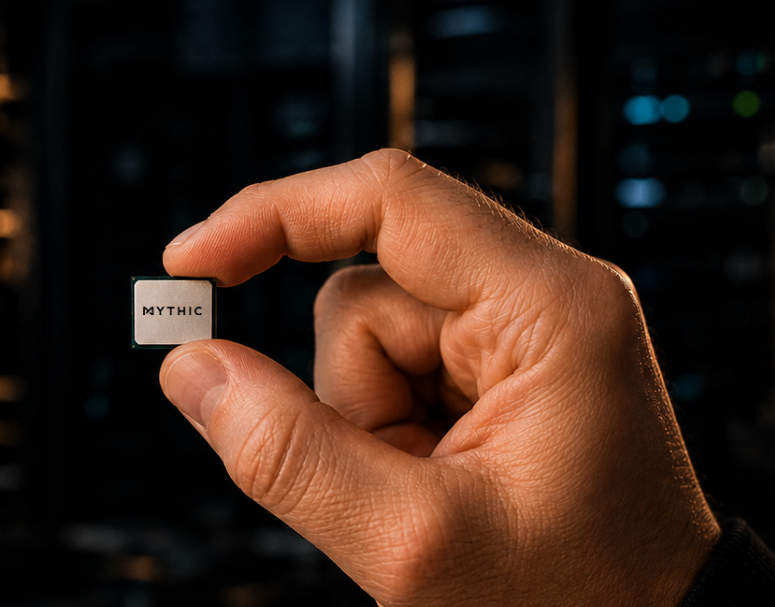
Today's AI runs on chips built for gaming. The industry co-opted GPU architectures, scaled them, and accepted the massive energy cost as the price of progress. Mythic saw a different path and took it. Our analog compute-in-memory architecture is designed from the ground up for AI, not adapted from something else.
Analog compute-in-memoryThe difference is clear.
Conventional chips split memory and processor into two separate places, then spend enormous energy moving data back and forth between them—billions of times per second. As AI scales, that inefficiency becomes staggering.
vs.
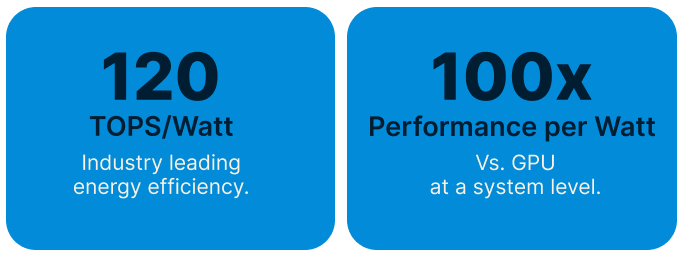
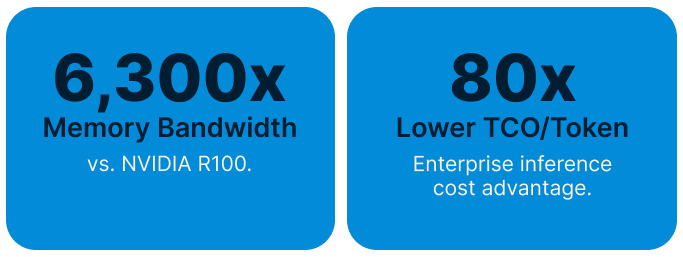
Mythic eliminates that bottleneck altogether. We perform computation directly inside memory, where the data already lives. No shuttling. No waste. Just AI that runs faster, cooler, and 100x more efficiently.

Mythic’s PlatformOne chiplet. Any scale.
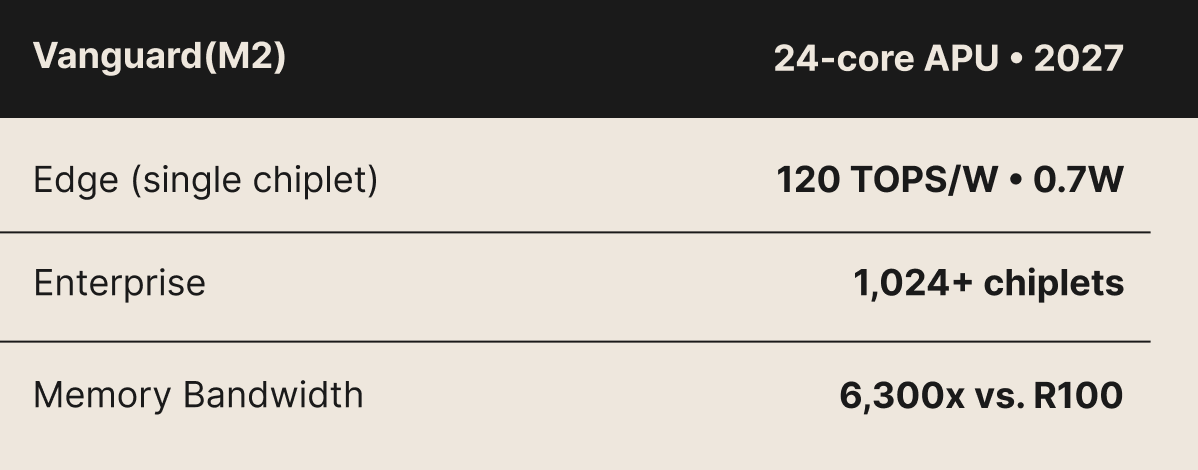
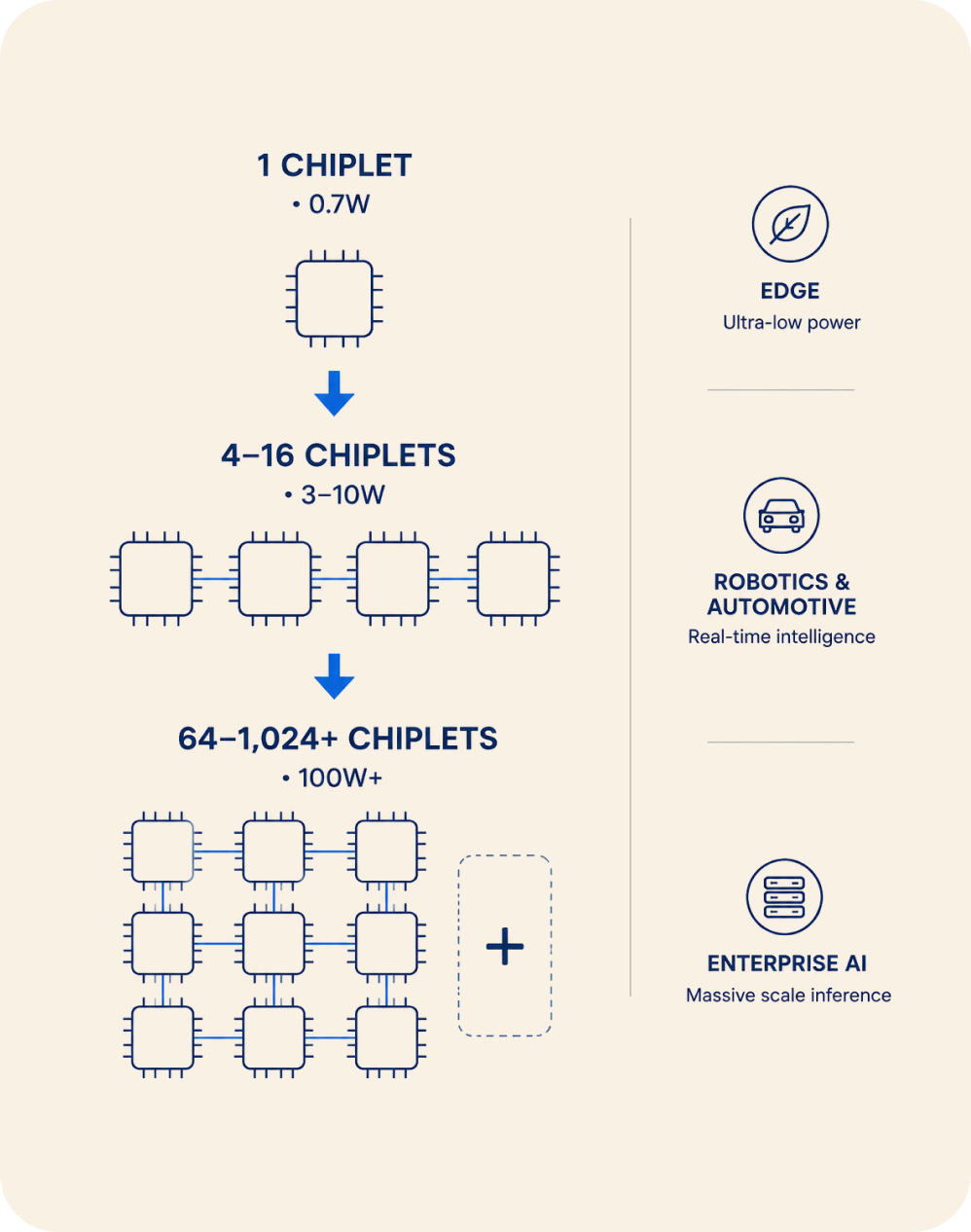
The Mythic APU is a scalable chiplet system. A single Mythic chiplet runs edge AI at 0.7W—small enough for a camera, a drone, or a vehicle. Stack 1,024+ of them and you have an enterprise LLM inference engine that outperforms GPU clusters at a fraction of the energy and cost. One architecture, one software stack, from edge to enterprise. No rebuilding, no re-engineering, no compromise.
For contextDigital hit a wall.
Analog is what comes next.
-
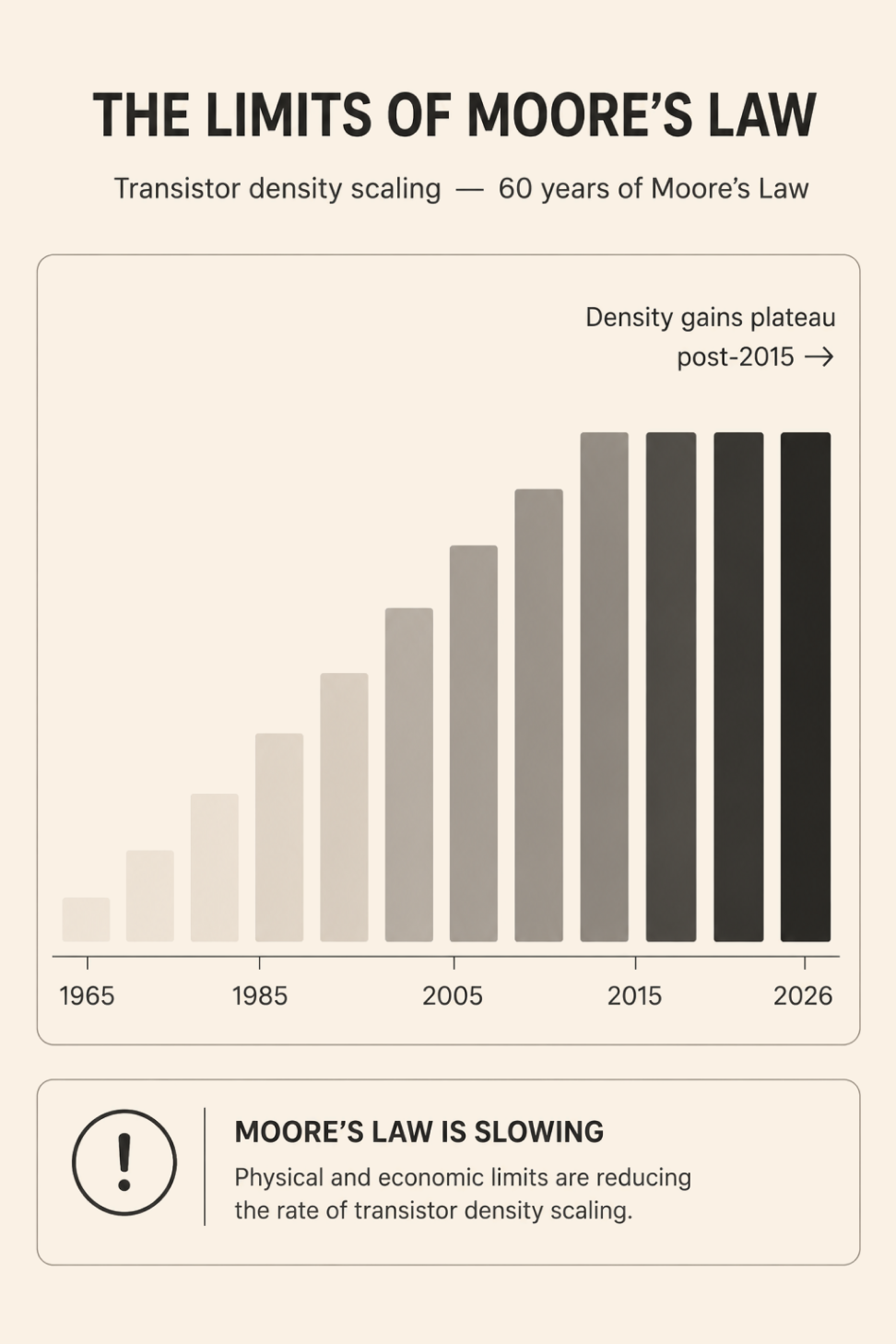
For six decades, the industry didn't have to think too hard about efficiency. Chip performance doubled every two years, reliably and automatically. But Moore’s Law has a physical limit, and the industry reached it. Transistors are approaching the size of individual atoms, and there's nowhere left to shrink.
-
The demand for AI has exploded while the chip architecture to support it has run out of road. The industry's response has been to scale up—more chips, bigger data centers, more power. But adding more of what's broken doesn't fix it. It just makes the problem larger, hotter, and more expensive.
-
Mythic's APU architecture, featuring analog compute-in-memory was built outside the constraints that stopped digital in its tracks. Mythic doesn't rely on transistor density for efficiency. It's efficient by design, with an inherent 1,000x structural advantage that grows with the platform.
In comparisonNot a better GPU.
A different answer entirely.
tHe SoftwareBridging the gap.
Mythic's software stack bridges the gap between how developers already build and how our analog hardware runs. It optimizes and compiles trained neural networks using a flow built on familiar ecosystems like PyTorch, and automatically handles the conversion into machine code — so teams get the performance and energy savings of Mythic hardware without a steep learning curve.
Ready to build on the right architecture?
Contact us to evaluate the Mythic M1 today.